Propaganda, Politics, Academy Awards & Film

“It's easier to fool people than to convince them that they have been fooled.” - Mark Twain (Samuel Langhorne Clemens)


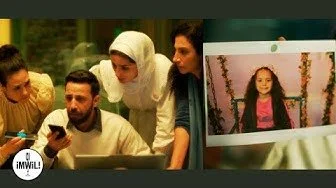
Here is my commentary after sitting through this film — a film that never once mentions the word Palestine, never once criticises Israel, purposefully left out the recordings and forensic evidence where Hind was killed in cold blood, framing her death as though it was an accidental tragedy, emphasising her family is situated in Germany and avoided addressing why they were in Gaza, implying that they accidentally wandered into a “restricted war zone" that they were not meant to be in. Not once addressed Israel or the IOF, they only said "armies". The only time they used the word “Israel” was to coordinate with Israel who was portrayed as benevolently handling the rescue missions that the Palestinian Red Crescent is portrayed as incompetent to manage without them. This is a form of history-revisionism, and needs to be critiqued in how it is placed in the current historic context (see Cedric Robinsons’ critical scholarship). This film also takes advantage of grieving families who are persuaded to participate in the hopes of their loss being used for some good, which we have also seen in projects like The Perfect Neighbor. Hind’s family has put their approval behind many other films and documentaries about this tragedy to help spread awareness, including a Palestian-Jordanian production, which also coordinated with the Palestine Red Crescent Society.

UN Security Council Session
https://forensic-architecture.org/investigation/the-killing-of-hind-rajab

* Edit: I will have to follow up with a proper coded analysis to inform audiences of all the structural problems and obfuscation in this film. This is not just about putting forward a subjective opinion on narrative allegory, but an analysis based on the use of the editing and directing techniques used in this film, that are materially grounded and researched in how they are used to frame audience perception. We witness how techniques are employed in Western media reporting and headlines to obscure the truth — films also employ shaping strategies. Why are we critical of Western news outlets for selective narrative and omission, yet accept it in film? I am putting out these concerns based on professional education and experience, and backed by academic scholarship. We need to understand better what we stand behind. If what we are supporting contributes to harm, then I believe we should have a better understanding of what we are supporting.
Edit (03/04/2026) Watch the conversation & analysis with Dr. Jared Ball.


Now that I have seen the propaganda piece The Voice of Hind Rajab, here is what I need to say:

If you support this film, you are not an ally to Palestinians. You are not an ally to oppressed people.

This film is about saviourism, history revisionism, and those who are concerned about appearing as a saviour while still wanting to be included in oppressor circles. If you are Palestinian and support this film, you really need to look at yourself and what colonial logics you have internalised*, especially if you are in the diaspora.

Shame on everyone who supports and profits off this film and exploitation of Hind. For all the reasons I posted months ago (see below) when I addressed what to consider around this film, actually sitting through this propaganda really shows how the world CHOOSES to package Palestine.

Shame on everyone that allows this film to contribute to the attempts at our erasure through liberal-zionist logics, and for overshadowing the films that are made by Palestinians — as it was clearly intended to do. Instead of films like Palestine 36 or All That’s Left of You, this film is made to ensure they don’t get placement in awards ceremonies and the platforming that brings. This film is for colonisers to feel better about themselves while they push our films to the side.

— Samantha Youssef


I made this post in September 2025 on social media and will share it here. I had not seen the film yet, but these are comments based on what was publicly available at the time.

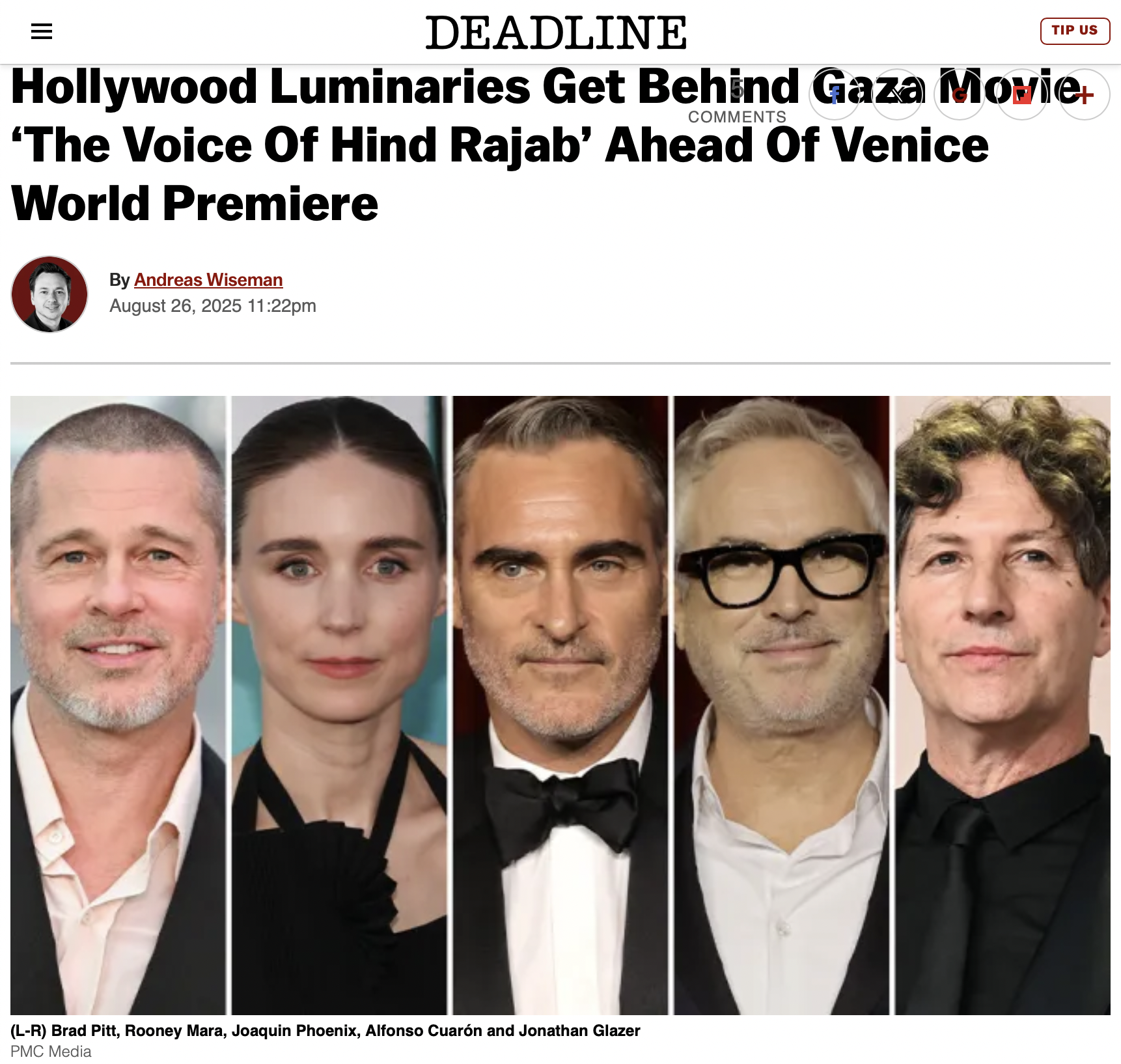
https://deadline.com/2025/08/brad-pitt-joaquin-phoenix-join-gaza-movie-voice-hind-rajab-1236498170/

September 6, 2025.

The Voice of Hind Rajab is a highly problematic film.

To give you some background on where I am positioning this information, I started at Disney and have been working for over two decades in Hollywood.  I work as an artistic & animation consultant/director on both animated and blockbuster feature films, advising in a small circle with the directors and executive producers. Check out the IG video essay on Superman.

This film mimics campaigns designed towards upholding imperial soft power structures and Hollywood-washing. Hollywood is trying to co-opt the Pro-Palestine movement (we already know that there is an increase in the propaganda budget for 2025) and there is a massive campaign around coopting and commodifying this. Hollywood is not an isolated actor on the political stage, it is part of an apparatus that cooperates with news media, music, and sports industries, among many other cultural structures. Likewise, directors and actors are not independent contractors, they are employees of agencies that are also corporate organisations.

Some useful points to consider:

  • This film is promoted by White, neo-liberal, Democrat-supporting, Hollywood heavy-weights, who are only speaking out since Trump was in office (for those following this phenomenon, this is a conversation on its own). They are commodifying Palestinian tragedy and rewriting themselves on the right side of history.

  • Brad Pitt is also part of/represented by CAA**, a publicly pro-Israeli agency which made a public statement in support of Israel. Those critical of Israel had to resign from the agency. (https://variety.com/2023/film/news/caa-maha-dakhil-resigns-board-israel-social-media-posts-controversy-1235764577/ )

  • It’s also important to ask why are they all White liberal faces on the promotion of this project and not one Palestinian directing creative? Casting actors does not help, none of the directing, or decision-making roles appear to have a single Palestinian.

  • Hollywood films (these can also be called First and Second Cinema - for more information look up Third Cinema) are funded by the CIA and Pentagon. Please read the peer reviewed scholarship by Alford & Secker, Lenoir, Der Derian, Stahl, Mirrlees. (American Journal of Economics and Sociology by Matthew Alford and Tom Secker is available here: https://onlinelibrary.wiley.com/doi/10.1111/ajes.12180 )

  • On Hollywood affiliated productions, directors are not the conceptualisers of the films. Directors and writers are hired by someone else to create a predetermined film. They are picked to appeal to targeted audiences (mainly Americans). Understanding this logic we can see how a Tunisian director from a France-based studio that tours Cannes is an ideal candidate to be sought out for this role, mainly because they are not Palestinian. This: 1) Further distances and orientalises Palestinian voices. 2) All Arabs are the same for their purposes and audiences, and someone more “politically palatable” is preferable.

  • This film contributes to ensuring that the famous events of the G-cide are remembered, shaped and curated in cultural memory that is in the form that Western interests want.

  • These films pacify resistance by neutralising radical ideas through narrative justifications, commodify it, and shape the story to uphold American value systems like American exceptionalism and hyper individualised hero-stories. These are key narrative structures that the imperial apparatus wants in films; the CIA is content to prioritise this even at the expense of making the government look bad, because the core idealogical messaging that must be put through offers more value laden returns for hegemony (see Alford & Secker).

  • One last thing, because they did the same thing with the Black Panther franchise (using Oakland) and Andor (referencing the Battle of Algiers). We need to ask why choose  Hind's story? Why not another? These references they use are the most accessible. They go to the easiest access that they think will hold the largest audience impact. They also want to co-opt any narratives that might cause people to start asking questions and reshape history by re-situating the context of these narratives in a way that favours the imperial violence that the US upholds. Because Hind was known among White circles due to Hind's Hall at Columbia University, this was the story that created cracks in the colonial mainstream narrative. This is a common strategy historically repeated, and there is a long paper trail of receipts on these tactics as well.

We also need to ask if these people like Brad Pitt and co. are so altruistic, why aren't they speaking out against the G-cide? why aren't they speaking out about how their studios and industry help R&D and propaganda for the US military? Their promotion of this film aligned with the events of the Freedom Flotilla, where even other celebrities were on the ground supporting it. Why aren't they getting on the flotilla or seeing it off? Even better, why aren't they using their own personal yachts, or the yachts of their society friends to join the flotilla? Why aren't they investing in sending aid to Gaza through its borders? For perspective, the funding given to this film will cost more than the millions of dollars in weapons that Canada just sent to Israel. Why aren't they doing something of material significance to people in Gaza with their money? Instead they are investing in an all White promoted production, hiring a Tunisian employee, and profiting off it. Why are these White company-men owned by pro-Israeli agencies being the ones to be the faces of a Palestinian story and not use their voices to uplift any Palestinians to tell their stories? There are Palestinian screen writers, directors, etc. in the US, as well as in Palestine and other countries.

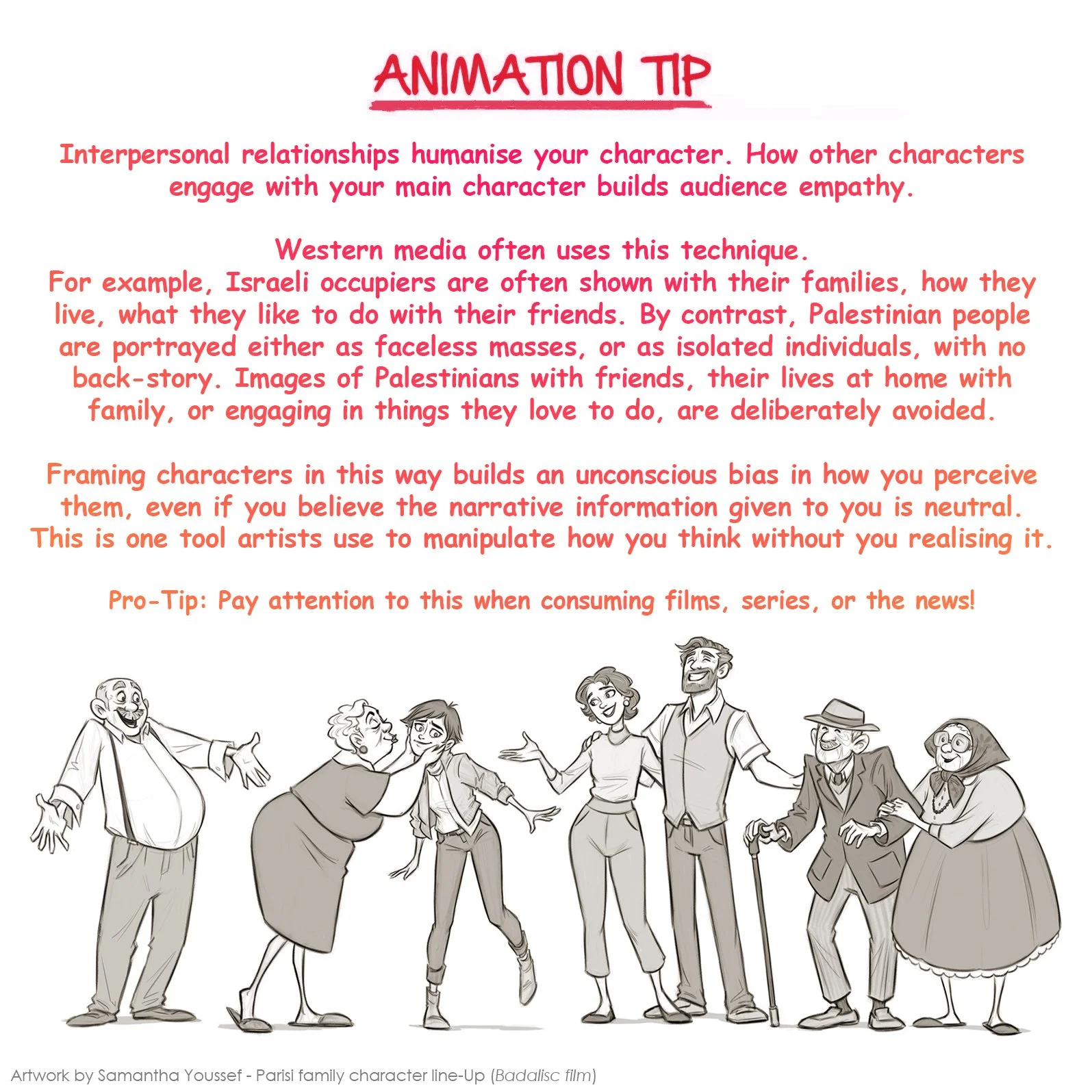
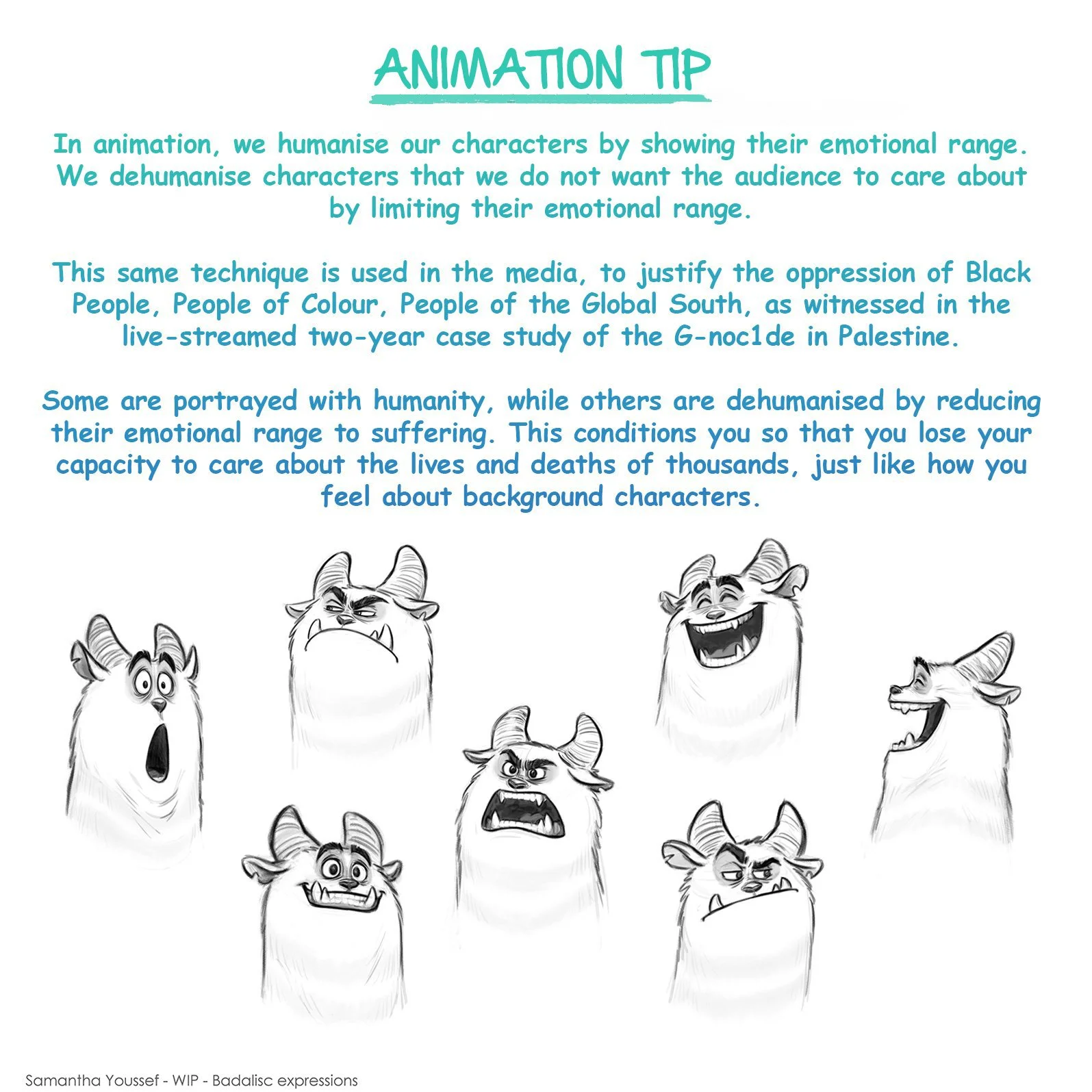
More importantly, and I know I'm being a bit blunt, but as a directing creative on the inside, I have witnessed how effective our work has been on influencing the average person. How visceral and emotional the push back can be from the audiences that we filmmakers — essentially — dupe. When you work at high levels on the inside, it’s very different to what the public thinks it is, and I am constantly astounded at how much people believe in these productions or what we choose to reveal as "behind the scenes". So if there is a knee-jerk response in anyone to be immediately excited about this, or jumps on board to defend or celebrate it without questioning, I think this is what we have to work on unravelling in ourselves and in our socialisation. There is no legitimate logic behind this behaviour when it is interrogated. There is, however, ample documentation in scholarship and journalism that illustrates how, since WW1, and especially WW2, Hollywood is America's greatest soft power asset. What needs to be interrogated is why do we even think figures like these Hollywood celebrities have anything of value to contribute morally or intellectually, and why do we rely on, and promote, their approval. This reflects poorly on us as a whole, the celebrity obsession reflects how easily we are persuaded.

It’s a really depressing testament to how good we are at our jobs that people are so desperate to have their story told by this system that they will promote it.

At ‘best” this film is racist, at worst it is sinister and nefarious.

— Samantha Youssef


Additional added notes:
* Understand what is legally defined as anti-Palestinian racism
https://antipalestinianracism.org/, here is the full legal report.
** France billionaire, Francois-Henri Pigault,
completed the acquisition of a majority stake in CAA in September 2023. Tanit Films is a France based studio. CAA is the official North American distributor of the film The Voice of Hind Rajab.

The Animation Storytellers of Gaza

Meet Haneen Koraz, Nour A-Jawad, and the animation storytellers of Gaza. The people of Gaza, the children, the men, the women, have inspiring stories to tell through what they create through their films, and what they create through the spaces and programs that they build.

You can support the children and the teachers through their Patreon page.

https://www.patreon.com/c/AnimationStories

You can also donate here:

https://gofund.me/5260e826

Animation Stories - Your support will help:

• Keep dreams alive: Sustain weekly animation workshops where children craft entire worlds frame by frame, breath by breath.

• Feed the imagination: Provide access to the simplest tools—paper, pencils, plasticine—that become portals to self-expression.

• Foster survival through expression: In a world trying to erase Palestinian voices, storytelling becomes resistance—and art, a lifeline.

• Build a safe space for the spirit: A makeshift studio in Gaza where children animate not only characters but their futures.

• Bridge worlds: By keeping Haneen, her team, and her students connected to an international community of artists, mentors, and believers, we’re creating powerful art and an unprecedented living archive.

This is not charity - this is a shared act of imagination, defiance, and love.

Conversations on Hollywood & Empire

I hope these conversations will help the general public understand what we are coding in animated and blockbuster feature films. Additionally, I appeal to my colleagues in the industry to start asking the questions that I know you never ask. Please start engaging critically.


Encoding Empire on Black Liberation Media

Encoding Empire Part 2 on iMWiL

Graduate Dissertation:
Encoding Empire: How Black Panther Manufactures Consent for Imperialism Among Oppressed Groups - Graduate Dissertation
https://www.academia.edu/143503421/Encoding_Empire_How_Black_Panther_Manufactures_Consent_for_Imperialism_Among_Oppressed_Groups


Mtume Gant Within Our Gates

https://www.patreon.com/Tumes

Should We Believe the Superman Conversation?

Because the film industry is largely responsible for the collective conditioning that prevents us from taking action. I see people wondering why no one is doing anything to stop the G-cide and I hope if we can be aware of the social conditioning, it can help wake us up.

I honestly don’t know what more to say anymore, but I will still try to do what I can and offer some insight that might help shift awareness.

This video came about because I saw how effective this film has been in co-opting people who are critical thinkers, and I was asked by a lot of people what my thoughts were - given my background.

I hope this will engage conversations, and spread awareness, so we can imagine a better future for all of us, and how we can create art and culture that is not complicit in imperialist agendas.

Please share and help educate! Comment on the IG video if you would like to see more on these topics or looking at other projects.

If you’d like some sources to get you started on topics discussed, check out the literature and scholarship by: Edward Said, Stuart Hall, Roger Stahl, Tim Lenoir, Luke Caldwell, Tanner Mirrlees, Matthew Alford, Tom Secker, Gabriel Rockhill, DerDerian, Aaron Franz , bel hooks, Robert McChesney, Ali Kadri. 

If you feel more people could benefit from this video, pick your social media poison and please share!:

Haneen Koraz, Nour A-Jawad, and Hand Crafted Animated Storytelling

Have you heard about Haneen Koraz’s animation studio? You can see the beautiful work here: https://www.instagram.com/animator_haneen

Haneen Koraz is an award-winning animation director and mentor from Gaza. Despite the on going genocide in Palestine, she has created a space of light and creativity, working with children and young artists to create animated films to share their stories to the world.

She has been active in supporting hand crafted animation, and is at the forefront of this endeavour creating art divorced from industrialism. I really want to bring attention to this. For those of us in the animation industry, there are so many conversations about coming back to understanding the artistry behind hand crafted animation production before CG intervention. The work Haneen is doing is exactly that. She is holding onto an art form that Western animators are always lamenting the loss of. This is a genuine love of a craft that I believe has been dwindling in the spaces where animation is the most funded, yet least creative.

Her efforts not only preserve Palestinian voices but also inspire global conversations about resilience and the universal power of storytelling. The work she is doing is incredibly inspiring, and demonstrates how to realign ourselves as artists and storytellers, and not industry technicians.

I don’t want to speak too much for Hanaan, I’ll put forward a quote to share her own words. Please support her, and amplify her work:
https://www.gofundme.com/f/help-haneen-koraz-empower-voices-through-art

“In the Presence of Imagination, I Forget the War

When a child chooses a story, my role as a director and trainer is to help shape it—to make it clearer, richer in detail, and closer to their soul. We don’t have boards to explain things, so we write on the walls. These walls witness the birth of small dreams growing amid the rubble.

In these moments, I find my happiness.

I forget the war.
I forget the bombings.
I forget everything that frightens and breaks me.
I forget the dark images the future paints in my mind.

In the animation workshops, I return to myself—to my passion, to my boundless imagination.

Despite everything, the children of Gaza still have the power to dream.

These children don’t just need aid—they need to be heard.
They need moments of joy, of hope, of life.
They need the chance to glimpse a better world, even if only through a sheet of paper, a pencil, and a story.”

- Haneen Koraz


Safina Filmmaker Project

Samantha Youssef has been invited to host a webinar as part of the Safina Filmmaker Project on Saturday, January 25th. This workshop will offer a "behind the scenes" insight into the creative process of feature film character-driven animation and the artistic journey of bringing characters to life on the big screen. Samantha will share some insight into the unique work she does spanning across VFX and feature animation, from art direction to animation direction.

Click here for more info and other great workshops!

Food for Thought…on Being Artists in an Industry,

Who are we as artists in animation? 

Do we do it for the love of humanity? For the pursuit of “Universal Human Truths” that we strive for in our storytelling?  What does that mean?

Or do we do this so that we can be awarded a credit by the animation industry? Do we do it to identify with a fan culture? Perhaps as a means of getting praise or followers from fellow fans?  Who is the audience representing the opinions you worry about?

For myself, being an artist in this medium was a pursuit of putting art out there that inspired and connected with the hearts of people…. As I was inspired by it when I was younger. Creating inspirational work that touches upon our humanity is what drove me and inspired me.

Today we are faced with a crisis of humanity. There is a genocide happening in Palestine, and the animation industry is directly associated with it.

As artists, we have a beautiful gift, that of imagination…. Which can allow us to empathize, its our job to understand deeper stories and ask questions about what motivates our characters… to imagine outside of systemic structures that have been set up to dehumanize and marginalize.  When we are silent, we need to ask ourselves, who is the audience of our silence?  Who benefits from it?  Are we artists exclusively for the opinions of an industrial complex, or are we artists because we want to connect our common humanity?

Just some food for thought….

Conversation with Brent & David at Agora

Hello everyone!

Recently I was interviewed by industry leaders Brent George (former animation director at WB Games) and David Hubert (former animation supervisor at Dreamworks) on the Agora Community Site. We covered a lot of interesting topics about the technique, and conversations about the animation and film industry. (Thank you Brent and David for inviting me to share this conversation with you! )


Staying Creative & Inspired During Isolation

2020 has been a challenging year for many artists. I hope you are all staying safe and doing well during this time. Some artists and creators are able to continue their practice from home. However for those that are missing live model drawing sessions at a studio, the exchange and energy of being around your peers, or just feeling lost and struggling with inspiration, it can be a challenging time to supplement those needs. For anyone that is feeling a creative slump as a result of the current times, I thought I'd share a few tips that help me. 

  • Online video streaming of live model sessions

  • Photo references to practice life drawing

  • When in doubt, work on technique!

  • Online art challenges

Online Video Streaming of Live Model Sessions

Many of us are missing our live model drawing sessions. There is no ideal replacement for drawing a model in a studio space, but there have been a lot of video resources on YouTube, Facebook, and other social media platforms. Croquis Cafe has been a long standing figure drawing resource on YouTube. As well, many art galleries and studios have been offering recorded sessions online, with costumed and nude model resources. Search for ones in your community, social media, or your browser.

Video sessions are a great option because you can observe the model moving between the poses, how they shift their weight, and how they settle into a pose.  This gives you a better sense of where they were coming from and what they are moving into, so you can bring that insight into your drawings. These are valuable observations that we benefit from in a live studio, so having a video resource is the next best thing!

Photo References to Practice Life Drawing

Another option for your life drawing practice is to use photos for reference. When drawing from photos, make sure you are not copying but analyzing! If you are working on improving your gesture drawing and pose analysis, this is essential to your approach.

There are many photo references that can be found. I have always enjoyed Live Model Books' collection for studio poses because they offer a 360 degree view of the pose. They are my favourite photography resource for model drawing. When you are analyzing and not just copying, having alternate views to really observe what is happening in the pose is a huge asset.

I know right now spending money for training can be difficult. Another great option is to search for dance photography. I love to use dance poses when I am teaching. They are dynamic and have beautiful lines, which is fantastic for developing your eye to understand beautiful posing.

When in Doubt, Work on Technique!

I am often working on production artwork, but am always looking for time to create my own work. Or perhaps update aspects of my portfolio. However sometimes when left to your own devices it can be challenging to come up with ideas of what you want to work on next. When I'm in a creative slump and can't find inspiration or an idea for a new piece or an illustration, I go back to working on something technical, either a drawing technique I need to work on, some lessons I needed to practice, some creature or palaeontology studies... Just the act of doing something and getting some artwork done, not only helps refine your technical abilities, but I find it gets me starting and finishing something, and that usually leads to me unblocking whatever is preventing me with coming up with an idea.

Online Art Challenges

These are fun little challenges on social media. They can connect you with other artists, and find joy in participating and appreciating the art of the online community. If you're feeling blocked or in a creative slump, they can give you an assignment to help get you going. I find that once in a while these are a fun pick me up and give me direction on what to work on if I feel stuck!

Disclaimer: I very much enjoy participating in these challenges but I urge caution when participating in fan artwork challenges with characters that are not your property. I have created fan art pieces myself, but with that said, value your abilities and skills. It's important to respect yourself and your work, these challenges should not be opportunities to create free artwork for third parties. Use your discretion but this is something to be mindful of should you elect to create fan artwork. You are offering a free shout out via your art, and your art has value!

Thank you to all of you that are staying home and helping reduce pressure on our healthcare systems. I also want to thank everyone who has been contributing to keeping people healthy, providing services to keep us going as best as possible, and those who are sharing and offering what they can to help keep spirits up!


I hope these tips can be helpful! I hope you are all doing well, staying safe, and keeping others safe!

Happy 10 Year Anniversary Studio Technique!

happy_anniversary_studio_technique

🌟Happy 10 Year Anniversary Studio Technique! 🌟

It's been 10 years since I officially started a training studio for professional artists in the feature film, VFX, and video game industries, working with artists from Pixar, Disney, Sony, Dreamworks, ILM, Lucasfilm, EA, Ubisoft and many many other incredible studios.

To the studios out there - Thank you for choosing me to work with your talent and productions.

To the artists - thank you for working so passionately through my courses and workshops.

To the academies and colleges - thank you for integrating my book, Movement & Form, into your programs. 

Thank you everyone who has supported me along this journey! It has been an amazing time, working with studios across the world, meeting students at colleges on other sides of many oceans, and working with artists without borders through online workshops and courses! Not to mention publishing a book that has been circulated through more studios, schools and countries than I had ever imagined!

Here's to even more great things to come! Cheers! 🥂

- Samantha Youssef

Visiting Colleges

Most of the time I am teaching through masterclasses with professionals and consulting at studios. Which I absolutely love! The topics we can dive into are always exciting and diverse, and vary depending on the projects the studio is working on.

However, I always love when I can visit schools and talk to aspiring and passionate young artists! I had the chance to stop by Seneca College’s Animation Program in Toronto, and meet up with my amazing teacher, Werner Zimmerman, who taught (and inspired) me when I was in school at Sheridan.

Thank you for having me at Seneca!

- Samantha

Animation Paper Guide

fieldguide.png

Let’s talk about animation paper!

While there are more and more software options available to create drawn animation, there are still certain things that can only be achieved on paper.

For the hand drawn feature quality productions with performance animation in the Disney feature animation tradition, or for the artists that are truly into the craft at the highest technical level, let’s talk a bit about paper and finding the best options for you!

Paper, as with any artistic material, can be a personal choice, and there are a few different options. I will break down some items to consider when choosing animation paper, as well as sharing what I prefer to use myself and my reasons why.

12 Field vs. 16 Field

These terms are based on camera field guides. 12 field paper (12 inch wide field guide) is obviously smaller than 16 field paper (16 inch wide field guide). Both have their advantages and challenges.

 
16 field vs 12 field size comparison

16 field vs 12 field size comparison


When you are learning, I highly recommend 12 field paper.

To start, it is significantly more affordable.

Also, when you are not as experienced an animator, 12 field helps when you are learning to flip paper. The main reason that I prefer paper over digital is because you can flip your paper as you draw. There are flipping options in software packages, but they do not translate as effectively or work as fast and concisely as with paper. For more information on flipping, check out my flipping tutorial.

Mastering this technique is far better on 12 field paper. Once comfortable, it is easier to transition to 16 field, but it’s important to learn how to do this properly. If you are aiming for the highest quality of animation, you can not rely on your backlight or onion skinning, you need to flip CONSTANTLY as you work. Flipping technique can get sloppy with 16 field paper, so it’s important you learn it properly on manageable sized paper. I still work on 12 field paper at times because the ease of flipping on it allows you to work faster.

 
Clip from Hand Drawn Animation documentary film
 

Once you are experienced, and looking to create the highest quality of feature film animation, 16 field is the better option.

If you are aiming for performance oriented animation, or more sophisticated feature film animation in the Disney tradition, you will need the canvas size that 16 field offers you. This will become obvious to you as you progress. When starting out with basic exercises, 12 field is enough. However as you progress, you may feel restricted and that you need more space to draw. 12 field will eventually become quite limited, especially when handling acting, lip sync, and complex performance.

There are also projections in the theatre to consider. If your animation is going to be screened in a theatre, like the films we made at Disney, then 16 field paper scales better than a smaller drawing surface. Think of it in the way we apply this to photo resolution. The larger the paper, the higher the resolution.

I have a stash of both sizes of paper at my studio. They each have advantages depending on what I’m working on.

12 Field:

PROS:

  • more affordable

  • better for learning to flip paper

CONS:

  • limited canvas size

  • not as suited for higher resolution, theatrical release work.

16 Field:

PROS:

  • better drawing canvas

  • better for higher resolution (theatrical) screening

CONS:

  • more expensive

  • harder to learn on for flipping

Paper Quality

There are various types of paper you can get. This can get a bit personal, and is dependent on your drawing style as well. There are a variety of paper weights available. Experience with your way of working and the materials you use will help you choose what you like best. For myself, I feel it is dependent on the kind of pencils I’m using (how dark or light they are), how much flipping is required (how much paper endurance is required), and the length of the scene I’m animating (this also effects the amount of strain on the registration punches in the paper and if they will tear and deform).

Quality animation paper is made with some translucency, so that you can see the impression of the drawing on the paper beneath the page you are working on. However this does not mean that it is flimsy. Professional animation paper is also made with the understanding that you will be doing a lot of flipping, and therefor it has to endure the physical demands that flipping places upon it, as well as any erasing and any corrections you are doing to your drawings. Pro animation paper is a specific design of paper.

Some suppliers offer a mid tier standard quality of paper. It is not made for high end professional use, but it is still reliable in most cases and good for lower end productions or student work.

Suppliers often offer a cheaper economy option as well. This paper is much more affordable but tears easily. It is similar to printer paper, however I believe it is even thinner, to offer some translucency. It is without the reinforced quality that professional paper provides. This is fine for when you are testing the waters in animation, but it will not be ideal for when you get into more sophisticated work as it gets damaged easily with flipping and erasing.

Back in the hand drawn days at Disney Feature Animation, we used Chromacolour Prograde Plus animation paper.

Chromacolour used to be a Canadian company but is now turned over in the U.K. The paper options are not exactly the same as they were before, but this would be the professional paper that is the equivalent:
https://www.chromacolour.co.uk/animationsupplies/animation-paper/pro-grade-animation-paper.html *

* There are many other suppliers that sell animation paper. You do not have to go with Chromacolour. I have always purchased through Chromacolour, so it is the only one I can suggest from my personal experience. I have heard good things about Lightfoot LTD as well. Both companies manufacture environmentally conscious paper which I appreciate as well!

Paper Texture

How much tooth or smoothness? This can depend on your drawing materials. The higher quality paper that is made specifically for animation usually has one side that is a little smoother, and another side that has a bit more tooth (rough texture) to it. Depending on the drawing materials** you use (how waxy or chalky your drawing pencils are), you may prefer the smooth side or you may prefer the toothier side. I appreciate that about quality paper, I like being able to have the option that works best with the pencils I’m using.

** Side note: choosing your drawing pencils is dependent on your approach to drawing. Let me know in the comments if this is something you’d like me to talk about in the future!

Punched vs. Unpunched

paper.jpg

Punched animation paper is slightly more expensive as it comes already punched with standard animation pegbar registration.

If you purchase unpunched paper, you will need an animation paper punch. Proper animation paper punches can get very expensive. On top of the cost, you can only punch three to four sheets of paper at a time without damaging the punch, so it can be very time consuming to do this yourself.

Some people use a three round hole punch, like the ones you use for your school binders or office documents. While this can function, it is not a very good option for feature quality character animation. Proper animation punches alternate square and round holes. This type of peg registration provides much more secure paper alignment.

Classic 16 field disc Pegbar with alternating circle and square pegs

Classic 16 field disc Pegbar with alternating circle and square pegs

I personally recommend buying punched paper, and saving yourself the hours of time it would take to punch all the paper you will need. As well the cost of the punch equipment is so high, it’s only worth it if you are a production studio.


DIY Paper

21-lKxVLkzL.jpg

Some people opt to punch their own paper with round pegs, as they can use cheap printer paper (A4) and a regular hole punch. There are now peg bars available with three round holes instead of the animation standard of square and round pegs alternating. This can be a much more affordable option and great for learning on a budget or if you just want to try animation out for fun.

The downside of this is that it can work for basic fundamental assignments, but if you want to get into more sophisticated animation, the paper quality of basic A4 paper is not resilient to the flipping you are required to do and will tear or breakdown easily. There is also size to consider. A4 paper has an even smaller drawing area than 12 field paper. As well, the reason for the square and round alternating pegs is for a more secure alignment of your pages. As the paper wears down around the holes, it becomes looser and is therefor no longer as aligned. This means that your animation can jitter if the paper is not securely aligned to the registration pegs.***

***There are reinforcement stickers that you can purchase to help with this, but they are not always necessary if you have higher quality paper.


Please let me know on my instagram post if you liked this kind of article! I’ll be happy to post more conversations like this in the future!