Visiting Colleges

Most of the time I am teaching through masterclasses with professionals and consulting at studios. Which I absolutely love! The topics we can dive into are always exciting and diverse, and vary depending on the projects the studio is working on.

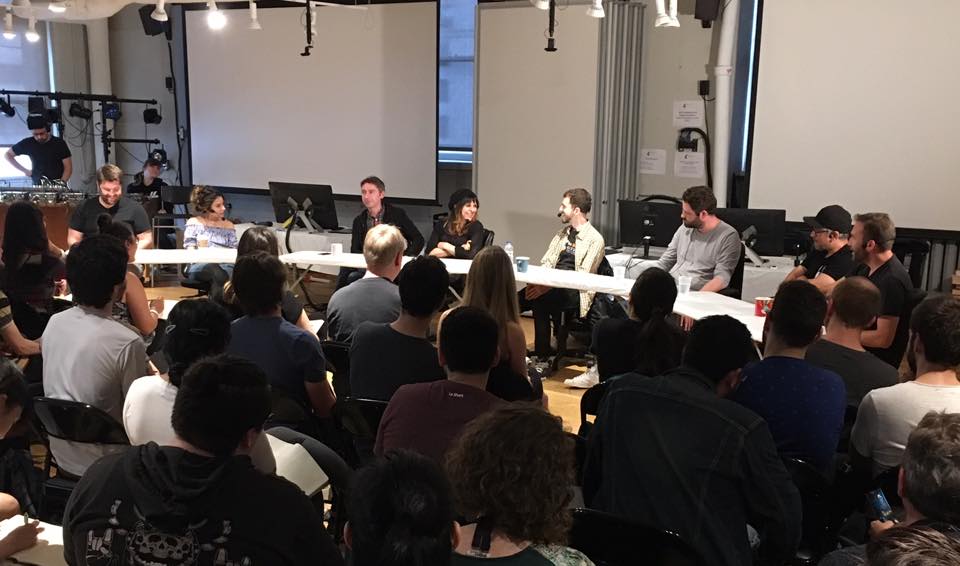
However, I always love when I can visit schools and talk to aspiring and passionate young artists! I had the chance to stop by Seneca College’s Animation Program in Toronto, and meet up with my amazing teacher, Werner Zimmerman, who taught (and inspired) me when I was in school at Sheridan.

Thank you for having me at Seneca!

- Samantha

Animation Paper Guide

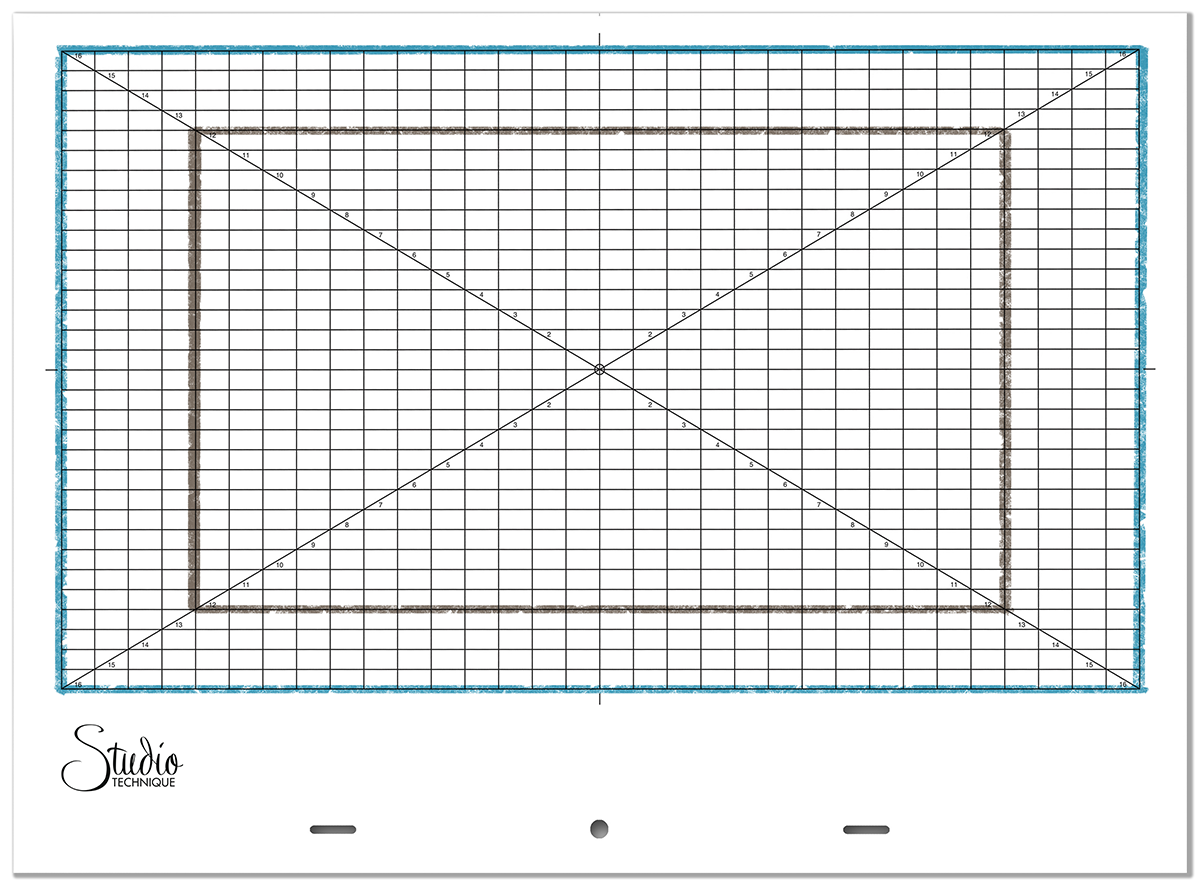
fieldguide.png

Let’s talk about animation paper!

While there are more and more software options available to create drawn animation, there are still certain things that can only be achieved on paper.

For the hand drawn feature quality productions with performance animation in the Disney feature animation tradition, or for the artists that are truly into the craft at the highest technical level, let’s talk a bit about paper and finding the best options for you!

Paper, as with any artistic material, can be a personal choice, and there are a few different options. I will break down some items to consider when choosing animation paper, as well as sharing what I prefer to use myself and my reasons why.

12 Field vs. 16 Field

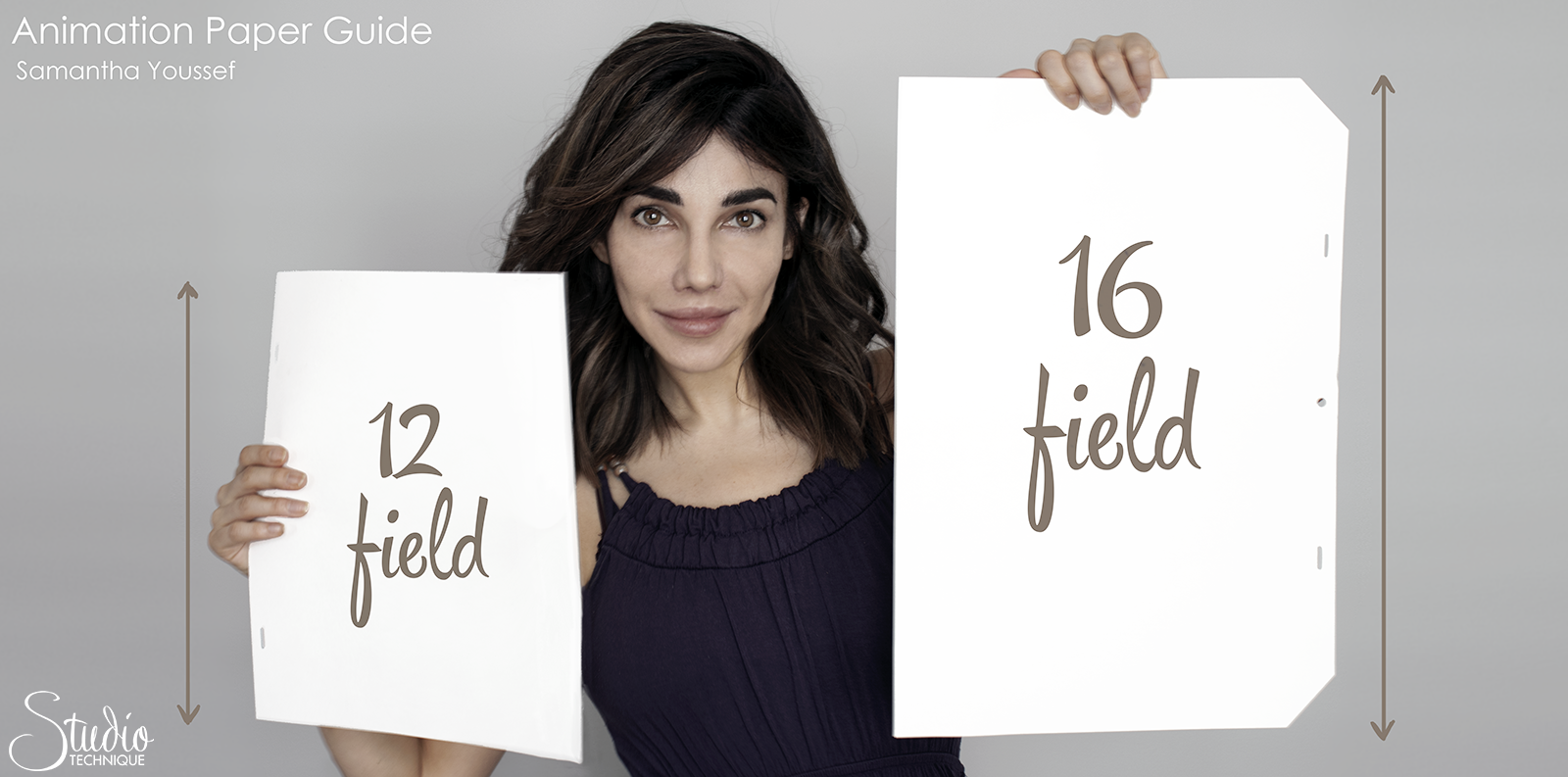
These terms are based on camera field guides. 12 field paper (12 inch wide field guide) is obviously smaller than 16 field paper (16 inch wide field guide). Both have their advantages and challenges.

 
16 field vs 12 field size comparison

16 field vs 12 field size comparison


When you are learning, I highly recommend 12 field paper.

To start, it is significantly more affordable.

Also, when you are not as experienced an animator, 12 field helps when you are learning to flip paper. The main reason that I prefer paper over digital is because you can flip your paper as you draw. There are flipping options in software packages, but they do not translate as effectively or work as fast and concisely as with paper. For more information on flipping, check out my flipping tutorial.

Mastering this technique is far better on 12 field paper. Once comfortable, it is easier to transition to 16 field, but it’s important to learn how to do this properly. If you are aiming for the highest quality of animation, you can not rely on your backlight or onion skinning, you need to flip CONSTANTLY as you work. Flipping technique can get sloppy with 16 field paper, so it’s important you learn it properly on manageable sized paper. I still work on 12 field paper at times because the ease of flipping on it allows you to work faster.

 
Clip from Hand Drawn Animation documentary film
 

Once you are experienced, and looking to create the highest quality of feature film animation, 16 field is the better option.

If you are aiming for performance oriented animation, or more sophisticated feature film animation in the Disney tradition, you will need the canvas size that 16 field offers you. This will become obvious to you as you progress. When starting out with basic exercises, 12 field is enough. However as you progress, you may feel restricted and that you need more space to draw. 12 field will eventually become quite limited, especially when handling acting, lip sync, and complex performance.

There are also projections in the theatre to consider. If your animation is going to be screened in a theatre, like the films we made at Disney, then 16 field paper scales better than a smaller drawing surface. Think of it in the way we apply this to photo resolution. The larger the paper, the higher the resolution.

I have a stash of both sizes of paper at my studio. They each have advantages depending on what I’m working on.

12 Field:

PROS:

  • more affordable

  • better for learning to flip paper

CONS:

  • limited canvas size

  • not as suited for higher resolution, theatrical release work.

16 Field:

PROS:

  • better drawing canvas

  • better for higher resolution (theatrical) screening

CONS:

  • more expensive

  • harder to learn on for flipping

Paper Quality

There are various types of paper you can get. This can get a bit personal, and is dependent on your drawing style as well. There are a variety of paper weights available. Experience with your way of working and the materials you use will help you choose what you like best. For myself, I feel it is dependent on the kind of pencils I’m using (how dark or light they are), how much flipping is required (how much paper endurance is required), and the length of the scene I’m animating (this also effects the amount of strain on the registration punches in the paper and if they will tear and deform).

Quality animation paper is made with some translucency, so that you can see the impression of the drawing on the paper beneath the page you are working on. However this does not mean that it is flimsy. Professional animation paper is also made with the understanding that you will be doing a lot of flipping, and therefor it has to endure the physical demands that flipping places upon it, as well as any erasing and any corrections you are doing to your drawings. Pro animation paper is a specific design of paper.

Some suppliers offer a mid tier standard quality of paper. It is not made for high end professional use, but it is still reliable in most cases and good for lower end productions or student work.

Suppliers often offer a cheaper economy option as well. This paper is much more affordable but tears easily. It is similar to printer paper, however I believe it is even thinner, to offer some translucency. It is without the reinforced quality that professional paper provides. This is fine for when you are testing the waters in animation, but it will not be ideal for when you get into more sophisticated work as it gets damaged easily with flipping and erasing.

Back in the hand drawn days at Disney Feature Animation, we used Chromacolour Prograde Plus animation paper.

Chromacolour used to be a Canadian company but is now turned over in the U.K. The paper options are not exactly the same as they were before, but this would be the professional paper that is the equivalent:
https://www.chromacolour.co.uk/animationsupplies/animation-paper/pro-grade-animation-paper.html *

* There are many other suppliers that sell animation paper. You do not have to go with Chromacolour. I have always purchased through Chromacolour, so it is the only one I can suggest from my personal experience. I have heard good things about Lightfoot LTD as well. Both companies manufacture environmentally conscious paper which I appreciate as well!

Paper Texture

How much tooth or smoothness? This can depend on your drawing materials. The higher quality paper that is made specifically for animation usually has one side that is a little smoother, and another side that has a bit more tooth (rough texture) to it. Depending on the drawing materials** you use (how waxy or chalky your drawing pencils are), you may prefer the smooth side or you may prefer the toothier side. I appreciate that about quality paper, I like being able to have the option that works best with the pencils I’m using.

** Side note: choosing your drawing pencils is dependent on your approach to drawing. Let me know in the comments if this is something you’d like me to talk about in the future!

Punched vs. Unpunched

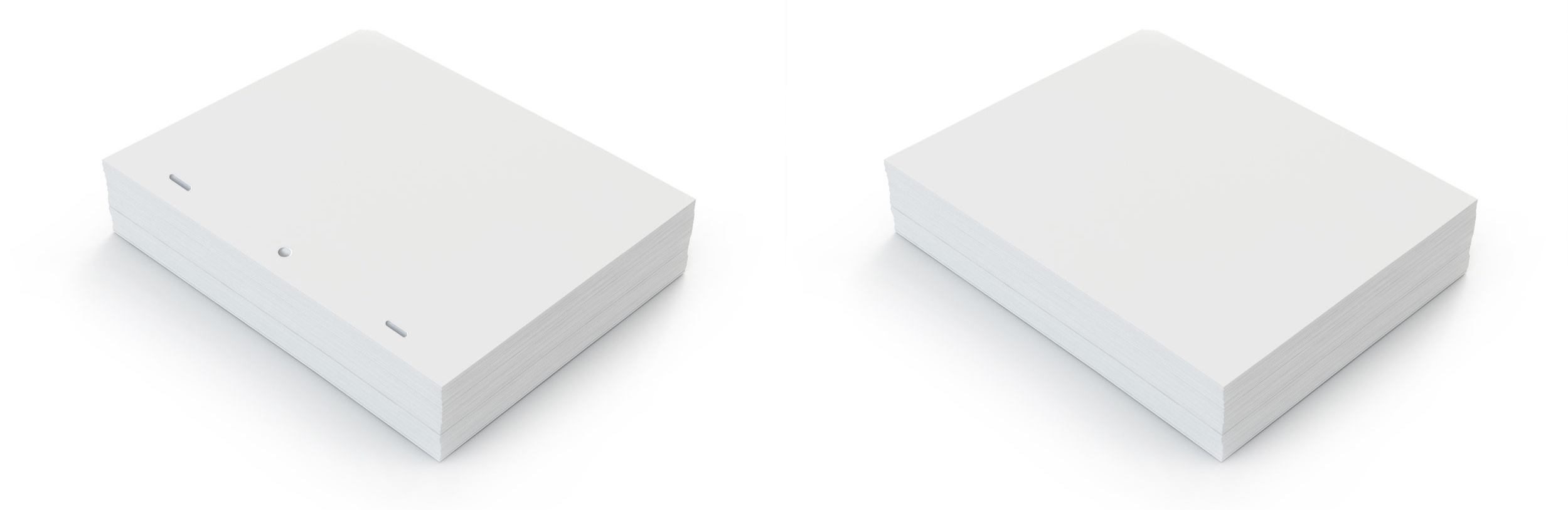
paper.jpg

Punched animation paper is slightly more expensive as it comes already punched with standard animation pegbar registration.

If you purchase unpunched paper, you will need an animation paper punch. Proper animation paper punches can get very expensive. On top of the cost, you can only punch three to four sheets of paper at a time without damaging the punch, so it can be very time consuming to do this yourself.

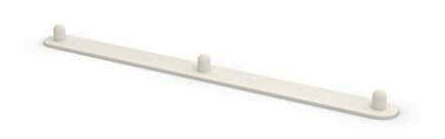
Some people use a three round hole punch, like the ones you use for your school binders or office documents. While this can function, it is not a very good option for feature quality character animation. Proper animation punches alternate square and round holes. This type of peg registration provides much more secure paper alignment.

Classic 16 field disc Pegbar with alternating circle and square pegs

Classic 16 field disc Pegbar with alternating circle and square pegs

I personally recommend buying punched paper, and saving yourself the hours of time it would take to punch all the paper you will need. As well the cost of the punch equipment is so high, it’s only worth it if you are a production studio.


DIY Paper

21-lKxVLkzL.jpg

Some people opt to punch their own paper with round pegs, as they can use cheap printer paper (A4) and a regular hole punch. There are now peg bars available with three round holes instead of the animation standard of square and round pegs alternating. This can be a much more affordable option and great for learning on a budget or if you just want to try animation out for fun.

The downside of this is that it can work for basic fundamental assignments, but if you want to get into more sophisticated animation, the paper quality of basic A4 paper is not resilient to the flipping you are required to do and will tear or breakdown easily. There is also size to consider. A4 paper has an even smaller drawing area than 12 field paper. As well, the reason for the square and round alternating pegs is for a more secure alignment of your pages. As the paper wears down around the holes, it becomes looser and is therefor no longer as aligned. This means that your animation can jitter if the paper is not securely aligned to the registration pegs.***

***There are reinforcement stickers that you can purchase to help with this, but they are not always necessary if you have higher quality paper.


Please let me know on my instagram post if you liked this kind of article! I’ll be happy to post more conversations like this in the future!


Comicon 2019 - Dynamic Posing! Drawing Characters from Life

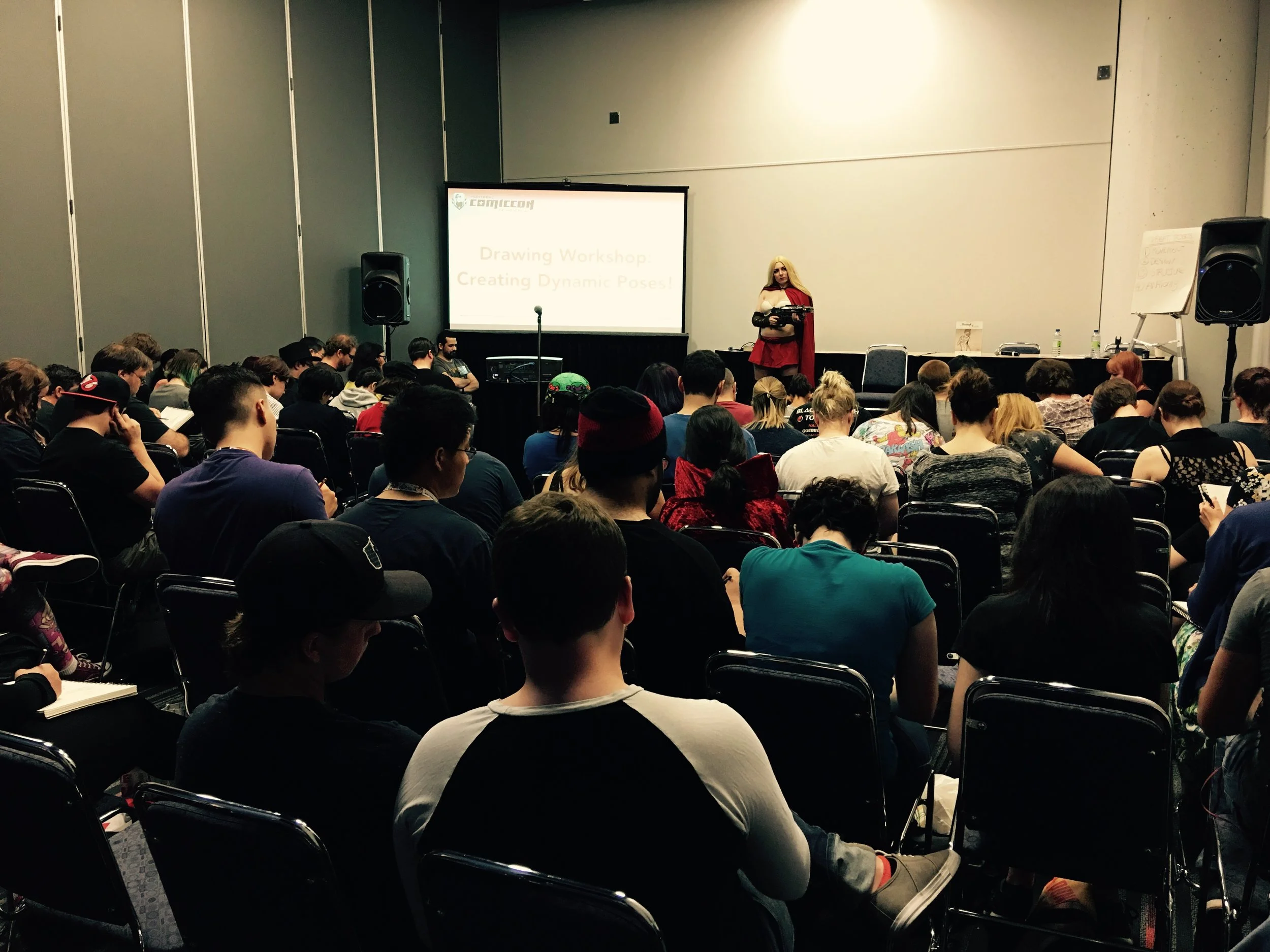
Another amazing year at Comicon with Dr Sketchy Montreal. This drawing workshop is always so much fun!

We covered quite a few drawing topics this year, had some great Q&A, and - as part of the Dr Sketchy Montreal experience - some great contests and prizes. Congratulations to our prize winners - tickets to attend Dr.Sketchy and a copy of the book Movement & Form!

It was such a great turn out. Thank you to everyone who participated in this fantastic event. We hope to see you next year!

More Free Online Classes!

Hi Everyone!

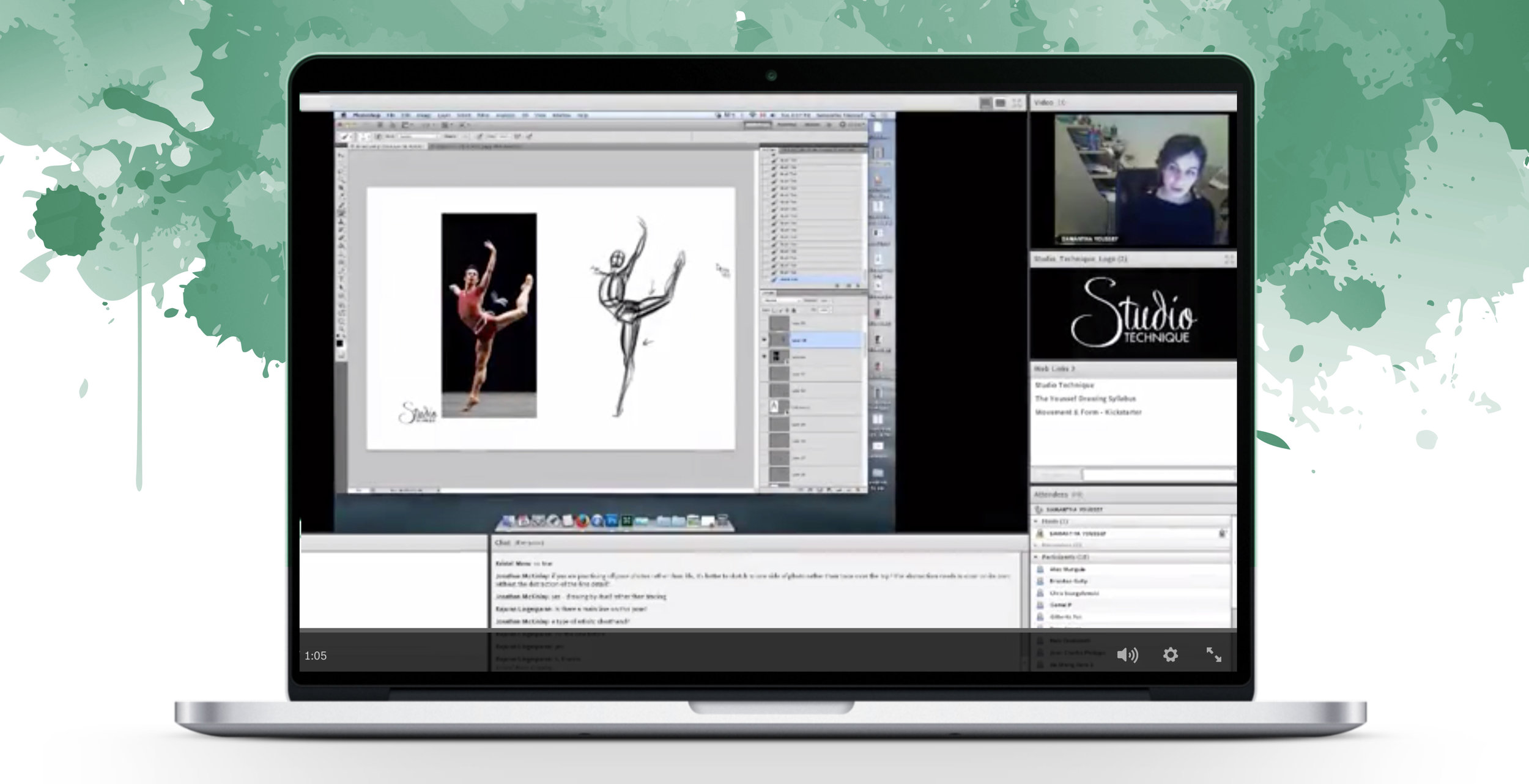
There was such a great turn out at the last online critique, demo, and Q&A, and there was not enough time to go through all the artwork and questions. So I've decided to do a couple more sessions during the campaign, and would love to see you there! The past sessions can be viewed on the campaign page.

The final session will take place:

  • June 29, 3pm EST / 12 pm PST

I will continue to go through the artwork and questions that were already submitted but for those that would still like to submit artwork, you can do so here:

You will be able to submit your artwork to be critiqued, or you can just attend, learn and be part of the conversation!

The session will run approximately 60 minutes. Artwork will be reviewed in order of submissions. We will try to get through as many critiques, as well as demos and answers to your questions, as we can in that time!

The link to the online Adobe Connect classroom will be available on the campaign page 15 minutes before the event.  It can be streamed through your browser.

Launch is happening! 24 Hour Discount!

The Kickstarter for the book Functional Anatomy by Samantha Youssef is now live! Supporters will receive a copy of the anticipated book! Please check it out!

https://www.kickstarter.com/projects/samanthasketches/the-youssef-drawing-syllabus-functional-anatomy

Screen Shot 2019-05-bb4 at 09.37.259_hue.jpg
Be sure to join the Free Class/Critique/Q&A at 3pm EST, June 8. The link will be available on the kickstarter campaign!

Be sure to join the Free Class/Critique/Q&A at 3pm EST, June 8. The link will be available on the kickstarter campaign!

Free Online Class/Critique/Q&A and 24 hr Discount - Save the Date!

Screen Shot 2019-05-14 at 09.37.59_hue.png

It's been a long wait! I have been dying to share with all of you that the 2nd volume of my drawing syllabus - Functional Anatomy - is on the horizon!

The Kickstarter campaign for this 2nd book will be launched June 8 at 12pm EST. There will be a discounted option for the book for the first 24 hours of the campaign, be sure not to miss out!

I am so excited to get this course published and sent out to you!  

Don't forget to save the date for the live and interactive online class with demonstration drawings, artwork critiques (poses - human or animal, figure drawings, illustrations, character designs, animation keyframe poses, etc), and a live Q&A on any drawing topics you would like to discuss - Posing, Gesture, Anatomy,  Design, and Perspecitive! This will take place to help launch the campaign for Functional Anatomy.

You will be able to submit your artwork to be critiqued, or you can just attend and learn.

The session will run approximately 60-90 minutes and begin June 8 at 3pm EST. Artwork will be reviewed in order submitted. We will try to get through as many critiques, as well as demos and answers to your questions, as we can in that time!

The link to the online Adobe Connect classroom will be available shortly before the event. It will be announced via the mailing list and social media.  It can be streamed through your browser.

Animation Talk at ECS

Such a great morning visiting Miss Edgar’s & Miss Cramp’s School for Girls. I was so happy to visit and be able to share something I love with wonderful students! Thank you ECS for inviting me!

Hand Drawn Animation Keynote at the Phi Centre Montreal

Had a wonderful time sharing insight into the world of hand drawn feature animation at the Phi Centre! Wrapped up the presentation with a little demo and got people to try out animation drawing as well! Thank you everyone who attended!

Comic Con 2018 - Dynamic Posing Workshop - Studio Technique & Dr.Sketchy Montreal

Comic Con 2018 was another fun and fantastic workshop with the Dr. Sketchy Montreal team! Thank you to our amazing Poison Ivy model, Elle Diabloe!

Congratulations to the winners of the Dr. Sketchy Montreal contests! Thank you everyone for attending! I hope it was informative, inspiring and fun!

- Samantha

Drawing Workshop at Comicon!

Looking forward to another year at Comicon! Hope to see you there! We will have the lovely character and burlesque performer, El Diablo, as Poison Ivy!

As well, The Youssef Drawing Syllabus: Movement & Form will be available for purchase and book signing.**

**Please bring cash for book purchases, as the wifi reception for online transactions has been inconsistent in the past. We will try, but we have found the conference centre panel areas to have bad reception.

Samantha Youssef and Crafting Imagination

Van Houtte shared the written interview! Thank you everyone for all your amazing support around this opportunity! You can see it via the link below:

http://www.vanhoutte.com/en/inspirations/samantha-youssef-and-crafting-imagination/

ComicCon 2017 - Studio Technique & Dr.Sketchy Montreal

Had another fun filled drawing workshop with Dr.Sketchy Montreal at ComicCon 2017!

Thank you everyone that came to draw with us! It was wonderful to share drawing tips with such passionate artists.

I was so happy to have the chance to talk with many of you, and am overwhelmed with your positive feedback on my book, Movement & Form.  Thank you for your support!

- Samantha

Comic Con 2017 - Dynamic Posing Workshop


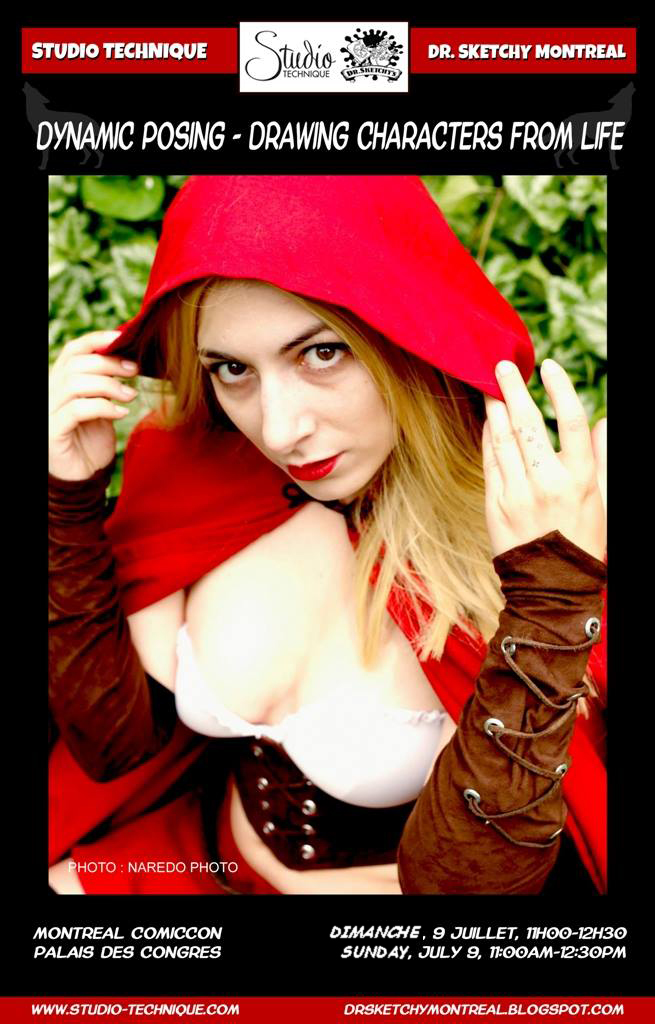
Studio Technique and Dr. Sketchy Montreal will be joining forces again this year to offer an exciting drawing workshop at Montreal Comic Con!  It will have the fun vibe everyone loves about Dr. Sketchy Montreal and Samantha Youssef will be sharing some drawing insight for professional and amateur artists alike!

The Workshop takes place on Sunday, July 9, from 11:00-12:30.

Our model will be dressed as Britney Waters (a.k.a. Red Riding Hood) from Grimm Fairy Tales! Its going to be a fun event!

As well, copies of The Youssef Drawing Syllabus: Movement & Form will be for sale and Samantha will be available for book signings!

Syn Studio's GATHERING OF THE MASTERS 2017

It has been an interesting time discussing art and industry with fellow artists at Syn Studio's Gathering of the Masters 2017! Looking forward to Mondays Workshop!

- Samantha

Conversation with the masters panel: Left to right - Matt Rhodes, Samantha Youssef, Ian McQue, Karla Ortiz, Anthony Walsh (MODERATING) , Rasmus Poulsen, Nivanh Chanthara, Raphael Lacoste

Conversation with the masters panel: Left to right - Matt Rhodes, Samantha Youssef, Ian McQue, Karla Ortiz, Anthony Walsh (MODERATING) , Rasmus Poulsen, Nivanh Chanthara, Raphael Lacoste

Art Models 10

tumblr_onw3zf9U6c1sp32yco1_1280.jpg

Art Models are releasing their tenth book compilation, Art Models 10.

It has a great variety of poses; from classical poses, character & performance oriented poses, dynamic poses, a selection of hand & feet references and portrait shots. After seeing the book, the selection of poses in this collection is inspiring.

There are also some of the poses from the photo shoot I had the opportunity to direct for The Youssef Drawing Syllabus: Movement & Form!

As figurative or character artists, it's essential to study the human figure from life. Nothing replaces that experience. However as access to a studio space with a model can be difficult or not always accessible at every hour of the day, Art Models has provided the absolute best resource I have come across that comes as close to being in a live studio as you can achieve.

Every pose they photograph is available digitally with a full 360 rotation from their custom studio, which is built to photograph the model at every angle so that you can turn the pose around and get a real sense of how it works, recreating the opportunities that only being in a studio space can afford you.

Adding to that, their models are incredible, the photography and lighting is beautiful.

Their latest book offers a great variety and samples of their work, and for the full library, you can visit them on Posespace.com!

- Samantha Youssef
  Artistic Director, Studio Technique